What is Greenship Certification — and Why It Matters for the Future of Industrial Estates
25 February 2026 | . admin-artha
25 February 2026 | . admin-artha

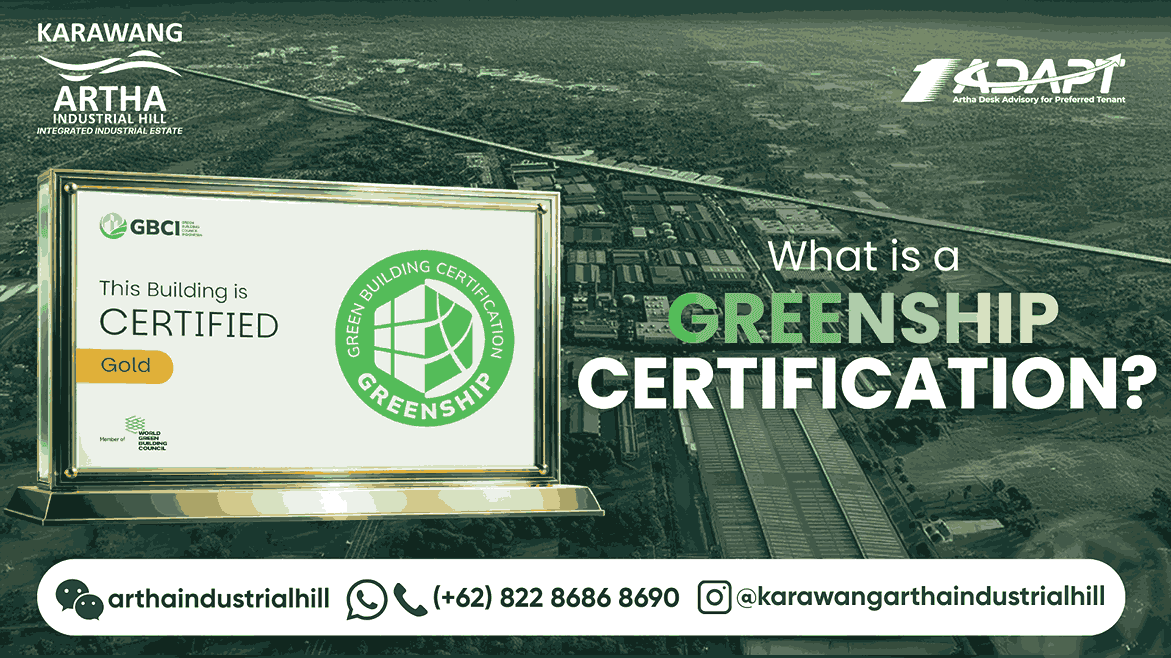
Sustainability is no longer a bonus feature in industrial development, it is a competitive requirement as industrial estates are no longer evaluated solely on accessibility, proximity to logistic & commercial infrastructures, or utility availability. Globally, investors and multinational tenants now assess environmental performance, ESG integration, and long-term resilience as key criteria before committing capital or expanding operations.
In Indonesia, one of the most recognised national benchmarks for green and sustainable development is Greenship Certification which is a rating system developed by the independent non-profit Green Building Council Indonesia (GBCI), part of a global network of green building councils (World Green Building Council) and plays a pivotal role in driving sustainable building and development practices nationwide.
Greenship measures how environmentally responsible a development is through a structured, point-based framework that makes sustainability measurable and verifiable. The assessment covers key aspects including Land Ecological Enhancement (LEE), Movement and Connectivity (MAC), Water Management and Conservation (WMC), Solid Waste and Material (SWM), Building and Energy (BAE), Community Wellbeing Strategy (CWS), and Innovation and Future Development (IFD). Projects are assessed through a structured point-based system, ensuring sustainability is measurable and verifiable.
For investors, a Greenship-aligned estate signals that it has clear environmental governance, efficient resource management, and lower long-term risk. While for tenants (especially in EV, electronics, and advanced manufacturing sectors) it helps them to meet global ESG reporting standards, improve operational efficiency, and strengthen sustainability positioning. In short, it enhances both credibility and competitiveness.
At Karawang Artha Industrial Hill (AIH), the masterplan has been structured in line with these Greenship criteria. The estate integrates Green Area and Habitat Conservation, alongside with Microclimate, demonstrating a regional design concept that can significantly improve and enhance microclimate quality compared to existing conditions. Its infrastructure planning reflects Water Schematic in the Area, Rainwater Run-Off Management performing regional rainwater runoff analysis calculations, and Wastewater Management through centralized systems. Mobility planning aligns with People and Goods Movement Analysis, Public Transportation, and Public Utilities and Amenities. Waste strategies incorporateSolid Waste Management – Operational Stage and Advanced Solid Waste Management, while community-oriented planning references Social and Economic Benefits. AIH is currently progressing toward Greenship Certification, formalising these sustainability measures under recognised national standards.